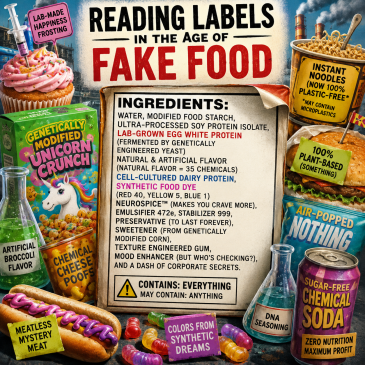
Reading Labels in the Age of Fake Food

Food labels matter differently when you are shopping for a child. Food allergies have increased over the last several decades, while the foods filling grocery store shelves are becoming more technologically complicated at the same time. Parents are now navigating reformulated products, unfamiliar ingredient names, precision fermented proteins, changing allergen language, synthetic colors, and marketing terms that do not always mean what we assume they mean. A product can even contain an egg protein made without a chicken and still pose a concern for someone with an egg allergy. Reading Labels in the Age of Fake Food teaches parents how to move past calorie counts and front package advertising so they can understand what is actually in the food they are putting into their children’s grocery carts.
More Reading Labels in the Age of Fake Food

The People Paying for Fiscal Responsibility

Fiscal responsibility sounds responsible until we ask who is actually being required to practice it. Federal and Idaho policy changes are reducing Medicaid and SNAP spending, increasing eligibility and compliance requirements, and shifting more costs onto low income households, while other policies deliver substantial financial gains higher up the income ladder. As a public health educator and mother to disabled children who will need lifelong care, I wanted to look beyond the political slogans and follow the numbers. What I found raises a harder question than whether government is saving money. Is it actually reducing costs, or simply moving them onto the people least able to absorb them? … More The People Paying for Fiscal Responsibility

A Public Health Look at Behavioral Escalation in Children

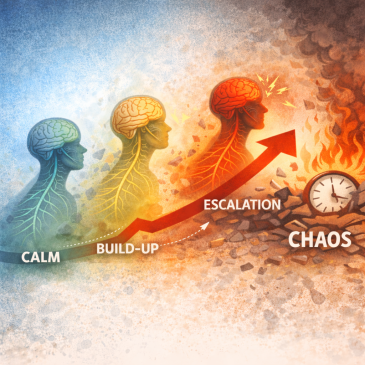
When a child shifts from calm to overwhelmed in seconds, it rarely happens without cause. What feels sudden is often the result of cumulative stress across the nervous system, environment, and daily demands. This article explores behavioral escalation through a public health lens and introduces a parent-driven survey designed to identify real-world patterns because what is not measured often remains misunderstood. … More A Public Health Look at Behavioral Escalation in Children

When Internal Noise Is a Nervous System Pattern Not a Personality Trait

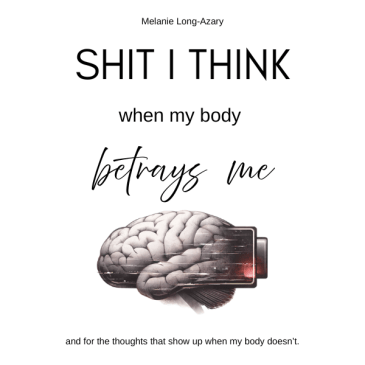
What most people call overthinking is often a pattern of unresolved internal processing. When the nervous system is carrying more input than it can organize, thoughts become repetitive, faster, and harder to separate from reality. This is not something to suppress. It is something to observe. Because once a pattern is visible, it can be understood. … More When Internal Noise Is a Nervous System Pattern Not a Personality Trait

Healing In Uncertainty

When systems fail, headlines overwhelm, and our bodies reflect the chaos around us, healing can feel out of reach. But what if the path forward isn’t about fixing everything at once—but about returning to what was always true? In this post, we explore how natural health, discernment, and faith-led wellness offer steady ground when the world feels unstable. This is not about trends—it is about truth. … More Healing In Uncertainty

Overstimulated, Not Overreacting: Rethinking ‘Bad Behavior’ in the Classroom

“Your child is not trying to give you a hard time, your child is having a hard time.” Regulation comes before education, because a dysregulated brain cannot learn, no matter how cute the bulletin board is. If we stop reacting to behavior and start responding to needs, we won’t just change a child’s day. We will change their trajectory. … More Overstimulated, Not Overreacting: Rethinking ‘Bad Behavior’ in the Classroom